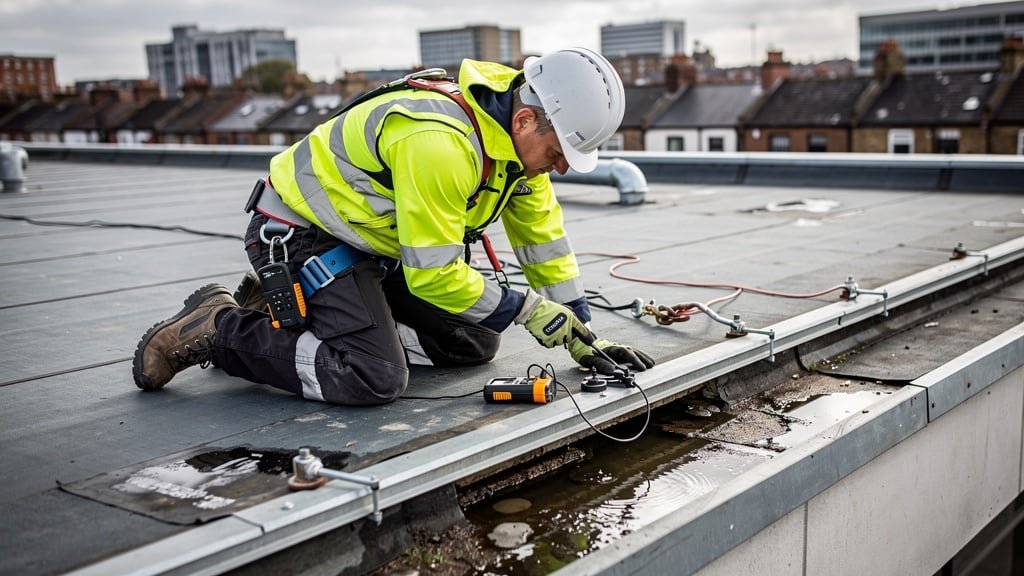
Commercial roof failures cost UK businesses tens of thousands in emergency repairs, business interruption, stock damage, and lost trading time—yet most of this expense is preventable through proactive roof management and regular professional surveys. My Roof Surveyor UK works with commercial property owners, facilities managers, and portfolio holders to implement strategic roof management programs that extend asset lifespan, prevent disruptive failures, and optimize capital expenditure timing.
This comprehensive guide explains commercial roof survey approaches, developing planned maintenance programs, budgeting for roof lifecycle management, and how proactive strategies deliver superior return on investment compared to reactive emergency repairs.
Why Commercial Roofs Require Different Approaches
Commercial properties present unique roof management challenges distinct from residential buildings.
Scale and Complexity:
- Larger areas: Warehouses, retail units, offices often have extensive roof area (500-5,000+ m²)
- Flat roof predominance: Over 60% of commercial buildings have flat or low-pitch roofs
- Complex systems: HVAC units, skylights, solar arrays, access hatches
- Multiple zones: Different roof areas with varying ages, conditions, systems
- Access challenges: Height, equipment, business operations complicate inspection
Business Impact Considerations:
- Trading disruption: Roof failures interrupt business operations
- Stock damage: Water ingress destroys inventory worth thousands
- Liability issues: Leaks affecting tenants, customers, or neighboring properties
- Compliance requirements: Health and safety, building regulations, lease obligations
- Asset value impact: Roof condition significantly affects property valuation
A Birmingham distribution center experienced catastrophic flat roof failure during operation. Water damaged £140,000 in stock, trading stopped for three days (£35,000 lost revenue), emergency repairs cost £28,000, and insurance premiums increased substantially. Proactive management through annual surveys costing £1,200 would have identified the developing problem, enabled planned repairs during non-trading hours, and prevented the crisis entirely.
Types of Commercial Roof Surveys
Commercial properties benefit from different survey approaches depending on objectives and circumstances.
1. Annual Condition Surveys
Regular monitoring forming the foundation of proactive management:
Survey scope:
- Systematic visual inspection of entire roof area
- Documentation of defects and deterioration
- Comparison with previous surveys showing deterioration rate
- Identification of maintenance requirements
- Prioritized recommendations for repairs
- Photographic evidence and condition report
Benefits:
- Tracks roof deterioration over time
- Identifies problems while still minor and economical
- Supports capital expenditure planning
- Demonstrates due diligence for insurance and compliance
- Typically costs £800-£2,500 depending on property size
2. Thermal Imaging Surveys
Advanced technology revealing hidden moisture problems:
Particularly valuable for:
- Large flat roof commercial properties
- Properties experiencing unexplained leaks
- Before deciding between repair and replacement
- After roof covering installation verifying quality
- Supporting insurance claims requiring moisture documentation
Cost-benefit:
- Survey cost: £1,200-£3,000 for commercial properties
- Identifies specific problem areas requiring attention
- Prevents unnecessary wholesale replacement
- Typically saves £20,000-£100,000+ through targeted rather than complete replacement
3. Pre-Purchase Due Diligence Surveys
Comprehensive assessment before property acquisition:
Critical for investment decisions:
- Detailed condition assessment of all roof elements
- Remaining lifespan estimation
- Capital expenditure forecasting (5-10 year horizon)
- Repair cost estimates for identified defects
- Compliance with building regulations and standards
A London investment firm commissioned pre-purchase surveys on three potential acquisitions. One property survey revealed flat roof nearing failure (remaining life 2-3 years, replacement cost £85,000). This information reduced purchase price by £100,000 and allowed the buyer to budget for planned replacement, avoiding emergency situation after purchase.
4. Insurance and Lease Compliance Surveys
Documentation meeting specific requirements:
- Insurance policy roof condition requirements
- Lease obligation compliance verification
- Dilapidations surveys for lease end
- Health and safety compliance documentation
Developing Planned Maintenance Programs
Strategic commercial roof management extends lifespan and optimizes expenditure.
Components of Effective Programs:
1. Regular Inspection Schedule:
- Annual professional surveys for all commercial properties
- Post-storm inspections after significant weather events
- Quarterly visual checks by facilities staff
- Seasonal drainage clearance (minimum twice yearly)
2. Preventative Maintenance Tasks:
- Drainage system clearance preventing water accumulation
- Minor repairs addressing problems before they worsen
- Sealant renewal at vulnerable junctions
- Vegetation control preventing biological damage
- Equipment maintenance (HVAC units, access hatches)
3. Capital Planning:
- 10-year capital expenditure forecast
- Roof replacement timing and budgeting
- Major repair planning
- Contingency reserves for unexpected issues
4. Documentation Systems:
- Digital record of all surveys and reports
- Photographic history showing condition changes
- Maintenance log documenting all work performed
- Warranty and guarantee management
Financial Benefits:
Property portfolio managers report that comprehensive planned maintenance programs:
- Extend roof lifespan by 30-50%
- Reduce emergency repair costs by 70-80%
- Minimize business interruption from roof failures
- Enable budgeted capital expenditure versus emergency funding
- Support higher property valuations through demonstrated management
Commercial Roof Types and Considerations
Different commercial roof systems require tailored management approaches.
Built-Up Felt Flat Roofs:
- Lifespan: 15-25 years with proper maintenance
- Common on: Older warehouses, industrial units, budget construction
- Key vulnerability: Blistering, cracking, ponding water damage
- Maintenance focus: Drainage, prompt blister repair, surface protection
Single-Ply Membrane Systems (EPDM, PVC, TPO):
- Lifespan: 20-30 years
- Common on: Modern commercial buildings, renovations
- Key vulnerability: Seam failures, mechanical fixing problems, punctures
- Maintenance focus: Seam inspection, penetration seals, ballast security
Metal Roofing (Standing Seam, Profiled):
- Lifespan: 30-50+ years
- Common on: Industrial buildings, retail warehouses
- Key vulnerability: Fastener corrosion, seam separation, coating deterioration
- Maintenance focus: Fastener inspection, coating renewal, seam integrity
Green/Living Roofs:
- Lifespan: Membrane 30-50 years with proper care
- Common on: Prestigious commercial developments, environmentally-focused buildings
- Key vulnerability: Root penetration, drainage blockage, membrane damage
- Maintenance focus: Specialized vegetation management, drainage, membrane protection
Budgeting for Commercial Roof Management
Strategic financial planning prevents capital expenditure surprises.
Annual Operating Budgets:
- Routine inspections: £800-£2,500 annually
- Preventative maintenance: £1,500-£5,000 annually depending on size
- Minor repairs: Reserve £2,000-£8,000 annually
- Drainage clearance: £300-£800 annually
- Total annual budget: Typically £4,500-£16,000 for medium commercial properties
Capital Reserves:
- Set aside £10-£15 per m² annually for roof replacement reserve
- Example: 1,000m² warehouse = £10,000-£15,000 annual reserve
- Accumulated over roof lifespan creates replacement fund
- Prevents cash flow crisis when replacement necessary
Typical Replacement Costs:
- Basic felt roof: £50-£70 per m²
- Single-ply membranes: £70-£100 per m²
- High-spec systems: £100-£150 per m²
- Green roofs: £150-£250+ per m²
Example: Replacing 1,000m² warehouse felt roof costs £50,000-£70,000. Accumulating £12,000 annually over 20-year lifespan creates £240,000 reserve—more than sufficient for replacement with contingency.
Legal and Compliance Considerations
Commercial property roofs involve legal obligations requiring management attention.
Health and Safety:
- Safe access for maintenance and inspection
- Fall protection systems
- CDM regulations compliance for major works
- Risk assessments for roof access
Building Regulations:
- Thermal performance standards for replacements
- Fire safety requirements
- Structural adequacy
- Building control notifications for major works
Insurance Requirements:
- Policy conditions regarding maintenance
- Notification requirements for known defects
- Survey documentation supporting claims
- Compliance with risk management recommendations
Lease Obligations:
- Landlord repair obligations (typically structure including roof)
- Tenant obligations for internal damage from roof leaks
- Dilapidations responsibilities at lease end
- Documentation proving compliance with maintenance obligations
Key Takeaways
- Commercial roof failures cause business interruption far exceeding repair costs
- Annual professional surveys identify problems before they become emergencies
- Planned maintenance extends roof lifespan by 30-50%
- Thermal imaging saves thousands through targeted rather than complete replacement
- Capital reserves of £10-15 per m² annually fund future replacement
- Documentation supports insurance claims, lease compliance, and asset valuation
- Proactive management delivers superior ROI versus reactive repairs
- Professional survey costs minimal compared to emergency failure consequences
Frequently Asked Questions
Annual professional surveys for all commercial properties form the minimum best practice. Properties with roofs over 15 years old, those experiencing any problems, or buildings with critical operations may benefit from twice-yearly surveys. Additionally, arrange surveys after significant weather events and before lease renewals or property transactions. Annual survey cost (£800-£2,500) is minimal insurance against business interruption and emergency repair costs that easily exceed £20,000-£50,000.
Property managers report comprehensive maintenance programs deliver 300-500% ROI through: extended roof lifespan (30-50% longer), reduced emergency repairs (70-80% fewer), minimized business interruption, lower insurance premiums, higher property valuations, and planned capital expenditure versus crisis funding. Annual investment of £5,000-£15,000 prevents emergency situations costing £30,000-£100,000+. Additionally, maintained roofs support higher rental values and asset valuations, delivering ongoing financial benefits beyond direct cost savings.
Decision depends on roof age, condition, remaining lifespan, and repair costs versus replacement costs. General rule: if repairs exceed 40-50% of replacement cost, or roof has less than 5 years remaining life, replacement often provides better value. However, thermal imaging surveys may reveal only portions require replacement, enabling targeted work. Professional surveys provide specific recommendations considering your circumstances, budget constraints, and business requirements. Avoid repeatedly patching failing roofs—cumulative repair costs often exceed timely replacement.
Top causes: inadequate drainage causing ponding water (40% of failures), poor installation quality (25%), lack of maintenance allowing minor problems to worsen (20%), membrane deterioration from age and UV exposure (10%), and impact damage from maintenance access or debris (5%). Most failures are preventable through proper drainage design, quality installation, and regular maintenance. Annual surveys identify developing problems before catastrophic failure, enabling preventative intervention when repairs are still economical.
Many commercial insurance policies require regular roof inspections as condition of coverage. Professional survey reports satisfy these requirements while demonstrating due diligence. Additionally, surveys provide essential documentation for claims—proving pre-damage condition, establishing storm damage versus pre-existing deterioration, and supporting repair cost estimates. Insurers increasingly require thermal imaging for flat roof claims, making comprehensive surveys valuable for claims support. Investment in annual surveys (£800-£2,500) protects against claim disputes worth tens of thousands.
Professional Commercial Roof Management
My Roof Surveyor UK specializes in commercial property roof surveys and management programs, working with property owners, facilities managers, and portfolio holders across the UK. Our commercial services include annual condition surveys, thermal imaging assessment, capital planning support, and comprehensive management programs tailored to your specific property requirements.
Whether you're managing a single commercial property or extensive portfolio, our professional surveys deliver the actionable information needed for strategic roof asset management, preventing disruptive failures while optimizing capital expenditure.