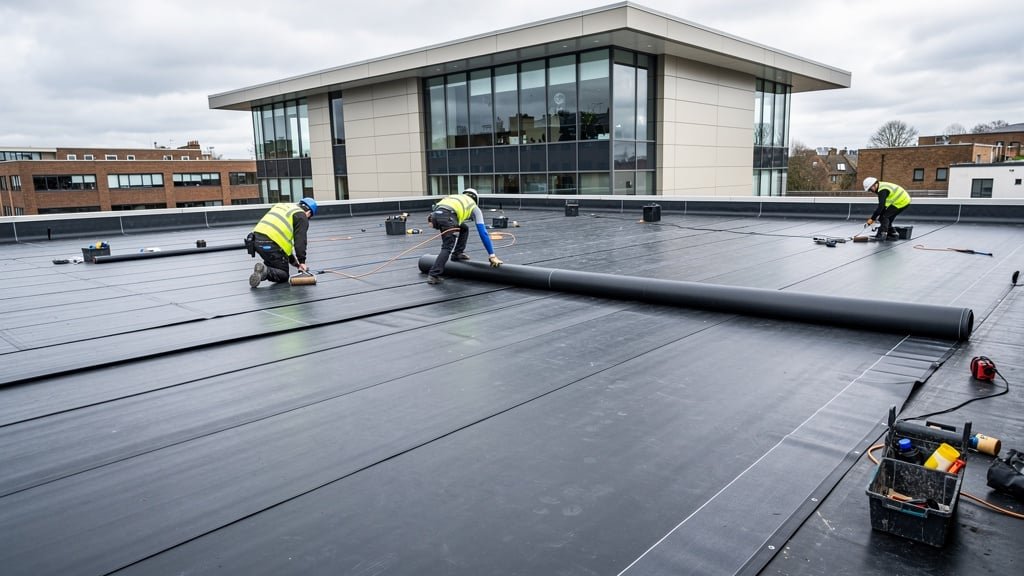
Flat roofs account for over 40% of commercial properties and a growing number of residential extensions in the UK, yet they're among the most misunderstood roofing systems. My Roof Surveyor UK encounters countless cases where flat roof problems escalate into major issues simply because owners didn't understand the unique characteristics, vulnerabilities, and maintenance requirements of these specialized roofing systems.
Unlike traditional pitched roofs that rely on gravity to shed water quickly, flat roofs demand precise installation, proper drainage design, and regular professional surveys to ensure longevity. This comprehensive guide draws on decades of specialist flat roof surveying experience to help you understand everything from construction types to survey methods and preventative maintenance.
Understanding Flat Roof Construction Types
The term "flat roof" actually encompasses several distinct construction methods, each with unique characteristics, lifespans, and potential problems. Professional flat roof surveys must account for these differences because inspection approaches and common defects vary significantly between systems.
Built-Up Felt Roofing Systems
Traditional built-up felt remains common on UK properties built between the 1960s and early 2000s. These roofs consist of multiple layers of bitumen-impregnated felt bonded together with hot bitumen.
Construction characteristics:
- Three-layer system: Typically includes a base layer, reinforcement layer, and mineral-finished cap sheet
- Heat-bonded: Layers are fused together using hot bitumen applied during installation
- Mineral surface: Top layer often features stone chippings or mineral granules for UV protection
- Expected lifespan: 10-15 years with proper maintenance, though many deteriorate faster due to UV damage and thermal cycling
During surveys, we examine felt roofs for splitting, blistering, lifted seams, and water pooling—common problems that accelerate as these systems age.
EPDM Rubber Membrane Systems
Ethylene Propylene Diene Monomer (EPDM) rubber has become the preferred choice for many residential flat roofs and smaller commercial applications since the 1990s.
System benefits and characteristics:
- Single-ply construction: One continuous rubber sheet with minimal joints
- Flexible and durable: Withstands temperature extremes without cracking (-40°C to +120°C)
- UV resistant: Purpose-formulated rubber resists solar degradation
- Expected lifespan: 20-30 years when properly installed and maintained
- Economical: Lower installation costs compared to other modern systems
Our surveys focus on seam integrity, edge detailing, penetration seals, and proper drainage design. The main vulnerability in EPDM systems stems from poor installation rather than material failure—specifically inadequate bonding at seams and edges.
GRP Fibreglass Roofing
Glass Reinforced Polyester (GRP) creates a seamless, waterproof shell that's becoming increasingly popular for residential extensions, balconies, and terraces.
Construction method:
- Liquid-applied system: Resin and fibreglass matting create a solid, jointless membrane
- Extremely durable: Resistant to cracking, UV damage, and temperature cycling
- Maintenance-free: Non-porous surface doesn't support moss growth or require periodic recoating
- Expected lifespan: 30+ years with minimal maintenance requirements
- Premium option: Higher initial cost but excellent long-term value
Surveys of GRP roofs typically reveal fewer problems than other systems, with issues mainly relating to edge details, drainage, and—very occasionally—installation defects like delamination in corners.
Single-Ply PVC and TPO Membranes
Commercial properties increasingly use advanced single-ply membranes made from PVC (Polyvinyl Chloride) or TPO (Thermoplastic Polyolefin).
System characteristics:
- Mechanically fixed or fully adhered: Installation method depends on substrate and building design
- Heat-welded seams: Hot-air welding creates stronger bonds than adhesives
- Highly reflective: White surface reduces solar heat gain and lowers cooling costs
- Expected lifespan: 20-30 years with proper installation
- Fire resistant: Class A fire rating makes these systems suitable for buildings with strict safety requirements
Professional surveys assess seam integrity, mechanical fixing adequacy, and potential for wind uplift on these lighter-weight systems.
Common Flat Roof Problems Identified During Surveys
My Roof Surveyor UK has assessed thousands of flat roofs across the UK. While each system has unique vulnerabilities, certain problems appear repeatedly across all types.
Water Pooling (Ponding)
Perhaps the single most common issue we identify during flat roof surveys is standing water that remains 48 hours after rainfall.
Why ponding matters: While flat roofs aren't technically flat—they should have a minimum 1:80 gradient for drainage—structural settlement, inadequate falls, or blocked outlets can create low spots where water accumulates. This standing water:
- Accelerates membrane degradation through constant UV exposure and thermal cycling
- Increases structural load (water weighs approximately 1kg per litre)
- Promotes algae and moss growth that further damages waterproofing
- Provides freeze-thaw cycles in winter that crack and split membrane
- Indicates potential drainage system problems
Case study: A Manchester office building we surveyed had chronic ponding across 30% of its felt roof surface. Investigation revealed that structural deflection over 20 years had created a depression. The constantly wet membrane had deteriorated to the point where multiple leaks were penetrating interior spaces. What could have been corrected with drainage improvements five years earlier required complete roof replacement at £85,000.
Membrane Blistering and Delamination
Blisters—raised bubbles in the roof surface—indicate trapped moisture or air beneath the membrane layers.
Formation mechanisms:
- Installation defects: Air or moisture trapped during application
- Substrate moisture: Damp insulation or deck releases vapor that can't escape
- Solar gain: Heat causes trapped air or vapor to expand, lifting membrane
- Inadequate bonding: Poor adhesion between layers allows separation
Small blisters (under 50mm) rarely cause immediate problems, but large blisters compromise waterproofing and are vulnerable to puncture. Our surveys document blister location, size, and quantity to assess repair urgency and guide contractors.
Cracking and Splitting
Visible cracks in flat roof membrane are serious defects that require prompt attention.
Common causes include:
- Thermal movement: Daily and seasonal temperature cycles cause expansion and contraction
- UV degradation: Solar radiation breaks down bitumen and plasticizers, making membrane brittle
- Age-related deterioration: Materials naturally lose flexibility over time
- Structural movement: Building settlement or timber deck movement stresses membrane
- Poor installation: Insufficient membrane thickness or inadequate overlap at joints
Felt roofs typically crack first along seams and at stress points like upstands. EPDM rarely cracks unless damaged, but poor seam installation can create gaps that leak.
Flashing and Upstand Failures
The junction between flat roof membrane and vertical surfaces (walls, parapets, roof lights) is inherently vulnerable and frequently the source of leaks.
Critical survey checkpoints:
- Upstand height: Should extend minimum 150mm above roof surface; inadequate height allows wind-driven rain entry
- Flashing condition: Lead, bitumen, or membrane flashings must seal completely without gaps or cracks
- Drip edges: Properly formed drips prevent water running back under membrane
- Weathering details: Joints between flashing and walls must remain sealed
A Birmingham property owner contacted us after ceiling stains appeared in her extension. The EPDM roof looked perfect from above, but our survey revealed that the upstand terminated only 75mm above the roof surface. During heavy rain with strong winds, water was being driven over this inadequate upstand and into the wall cavity.
Drainage System Problems
Effective drainage is absolutely critical for flat roof longevity. Our surveys always include comprehensive drainage assessment.
Common drainage defects:
- Blocked outlets: Leaves, moss, and debris accumulate in outlets and downpipes
- Inadequate capacity: Outlet size insufficient for roof area and local rainfall rates
- Poorly positioned outlets: Located away from actual low points where water collects
- Failed drainage sumps: Box gutters or valley channels that leak or overflow
- Damaged outlet details: Membrane lifting around outlet flanges
We use water testing to verify drainage performance—pouring water onto the roof and observing how quickly it clears and whether any pooling occurs.
Professional Flat Roof Survey Methods
Comprehensive flat roof surveys employ multiple inspection techniques to identify both visible and hidden problems.
Visual Inspection from Roof Level
Direct access enables detailed examination of membrane condition, but safety is paramount. Our surveyors assess:
- Overall membrane condition and visible defects
- Seam integrity throughout the roof area
- Upstand and flashing details at all penetrations and edges
- Drainage outlets, gutters, and water flow paths
- Evidence of ponding, repairs, or previous problems
- Condition of protective systems (paving, ballast, gravel)
Thermal Imaging Surveys
Infrared thermography is invaluable for flat roofs because it reveals moisture trapped within the roof construction—problems completely invisible to standard visual inspection.
How thermal imaging works for flat roofs:
Wet insulation retains heat differently than dry insulation. By scanning the roof surface with thermal cameras after sunset (when solar heat has dissipated), we identify temperature anomalies indicating trapped moisture.
Benefits of thermal surveys:
- Pinpoint specific areas of water ingress rather than removing entire roof
- Identify problems before they cause interior damage
- Guide targeted repairs, saving significant cost versus full replacement
- Quantify extent of problem for accurate repair quotations
- Document condition for insurance or property transaction purposes
A Leeds commercial building we surveyed appeared to have a sound EPDM roof just seven years old. However, thermal imaging revealed moisture affecting approximately 40% of the insulation layer. Further investigation traced the problem to failed seams that were allowing water penetration during heavy rain. The thermal survey saved the building owner from interior damage and enabled targeted repairs rather than premature full replacement.
Drone Roof Surveys
Drone technology offers unique advantages for flat roof assessment, particularly on large commercial properties or multi-story buildings.
Drone survey benefits:
- Safe inspection without roof access or working at height
- High-resolution photography documenting overall condition
- Identifying ponding areas visible from above
- Assessing large roof areas quickly and cost-effectively
- Creating detailed photographic records for condition monitoring
We typically combine drone surveys with thermal imaging and targeted roof-level access for comprehensive assessment.
Core Sampling and Invasive Testing
When surveys reveal problems or ambiguity about construction methods, core samples provide definitive information.
Core sampling reveals:
- Membrane type, thickness, and number of layers
- Insulation type, thickness, and condition
- Vapor barrier presence and location
- Deck material and condition
- Moisture content within roof construction
- Evidence of previous repairs or modifications
Cores are particularly valuable when considering roof coverings that might be installed over existing systems, or when moisture problems require understanding of the full construction to develop repair strategies.
Flat Roof Maintenance and Lifespan
Proper maintenance dramatically extends flat roof lifespan and prevents minor issues escalating into major problems requiring costly replacement.
Recommended Maintenance Schedule
Twice-yearly inspections (Spring and Autumn):
- Clear all drainage outlets, gutters, and downpipes
- Remove leaves, moss, and debris from roof surface
- Check all upstands and flashings for gaps or damage
- Inspect membrane for new cracks, blisters, or wear
- Verify no new ponding areas have developed
- Document condition with photographs for comparison
After severe weather:
- Check for storm damage, blown edge details, or debris impact
- Verify drainage is functioning properly
- Inspect for any water ingress signs in interior spaces
Professional surveys:
- Annual professional inspection for commercial properties
- Every 2-3 years for residential flat roofs
- More frequently for roofs over 15 years old or with known problems
Extending Flat Roof Lifespan
Proactive measures can add years to flat roof service life:
Protective coatings: Solar-reflective coatings applied to aging felt or bitumen roofs reduce UV damage and lower surface temperatures. These coatings can extend lifespan by 5-10 years when applied before significant deterioration occurs.
Drainage improvements: Adding outlets, improving falls, or installing overflow protection prevents ponding that accelerates membrane failure.
Prompt repairs: Addressing small problems immediately prevents water ingress that damages insulation and deck. A £200 flashing repair avoided now could prevent a £15,000 roof replacement later.
Access control: Limiting foot traffic and ensuring proper walkways prevents accidental damage to membrane.
Flat Roof Replacement vs. Overlay Systems
When flat roof surveys reveal significant deterioration, property owners face a decision: complete replacement or installing a new membrane over the existing roof.
Complete Replacement
Necessary when:
- Underlying insulation is saturated or damaged
- Deck structure shows rot, deflection, or deterioration
- Building energy performance needs improvement
- Current drainage design is inadequate
- Multiple previous overlay systems create excessive weight
Benefits of complete replacement:
- Opportunity to upgrade insulation to current standards
- Address structural issues and improve drainage
- Longest possible lifespan from new installation
- Full warranty on new system
- Remove all old, failed materials
Overlay Systems
Viable when:
- Existing deck and insulation are sound and dry
- Only membrane has failed while substrate remains good
- Budget constraints require lower-cost solution
- Work must be completed quickly with minimal disruption
- Building structure cannot support additional weight
Common overlay options:
- EPDM rubber over felt systems (most popular residential solution)
- Single-ply PVC over old bitumen (commercial applications)
- Liquid-applied systems over various substrates
Our surveys specifically assess overlay suitability by evaluating substrate condition, moisture content, and structural capacity.
Cost Considerations for Flat Roof Surveys and Repairs
Understanding typical costs helps property owners budget appropriately and recognize when quotes seem unreasonable.
Survey Costs
- Basic visual survey: £300-£500 for typical residential flat roof
- Thermal imaging survey: £600-£900 including detailed moisture mapping
- Comprehensive commercial survey: £800-£1,500+ depending on size and complexity
- Drone survey component: Adds £200-£400 to base survey cost
Typical Repair and Replacement Costs
- Minor repairs (small cracks, flashing work): £200-£800
- Significant patch repairs: £800-£2,500
- EPDM overlay (residential): £80-£100 per m²
- GRP fibreglass system (residential): £100-£130 per m²
- Complete replacement (commercial): £90-£150 per m² depending on specification
These costs vary by region, accessibility, and specification. London and Southeast typically run 15-25% higher than regional UK pricing.
Key Takeaways
- Flat roofs require specialist knowledge—construction types vary significantly
- Regular professional surveys prevent minor issues becoming major problems
- Water pooling indicates drainage problems that accelerate deterioration
- Thermal imaging reveals hidden moisture invisible to visual inspection
- Proper maintenance can extend flat roof lifespan by 30-50%
- Survey costs are minimal compared to repair expenses from delayed detection
- Professional assessment determines whether overlay or replacement is appropriate
Frequently Asked Questions
For commercial properties, annual surveys are recommended. Residential flat roofs should be professionally surveyed every 2-3 years, or more frequently if the roof is over 15 years old or has a history of problems. Additionally, arrange surveys after severe weather events and always before property purchase or sale.
Traditional felt roofs typically last 10-15 years. EPDM rubber systems provide 20-30 years of service. GRP fibreglass roofs can last 30+ years with minimal maintenance. Single-ply PVC and TPO membranes generally last 20-30 years. These lifespans assume proper installation, adequate drainage, and regular maintenance. Poor installation or neglected maintenance can reduce these figures significantly.
Yes, ponding water is a significant concern. While brief water accumulation after heavy rain is normal, water that remains 48 hours after rainfall indicates drainage problems. Constant water exposure accelerates membrane degradation, adds structural load, promotes biological growth, and creates freeze-thaw damage in winter. Professional surveys can identify the cause (inadequate falls, blocked drainage, structural deflection) and recommend solutions before major damage occurs.
Sometimes, but not always. Overlay systems are viable when the existing deck and insulation are sound and dry, with only the membrane having failed. Our surveys assess substrate condition, moisture content, and structural capacity to determine overlay suitability. If insulation is saturated, deck is damaged, or drainage is inadequate, complete replacement is necessary despite higher costs. Attempting overlay over compromised substrate will result in premature failure of the new system.
Thermal imaging reveals moisture trapped within roof construction that's completely invisible to visual inspection. This technology identifies exactly where water has penetrated, enabling targeted repairs rather than replacing entire roofs unnecessarily. For flat roofs showing signs of leaks or older systems being evaluated for overlay, thermal imaging provides crucial information about hidden problems. The additional survey cost (typically £300-£400) often saves thousands by guiding precise repairs.
Get Your Professional Flat Roof Assessment
Don't wait for visible problems to develop. My Roof Surveyor UK provides comprehensive flat roof surveys using visual inspection, thermal imaging, and drone technology to identify both obvious and hidden defects. Our specialist surveyors understand the unique challenges of flat roof systems and provide clear, actionable recommendations.
Whether you're managing a commercial property portfolio, considering a flat roof extension, or concerned about an existing flat roof, our independent surveys deliver the detailed information you need to make informed decisions.